The context
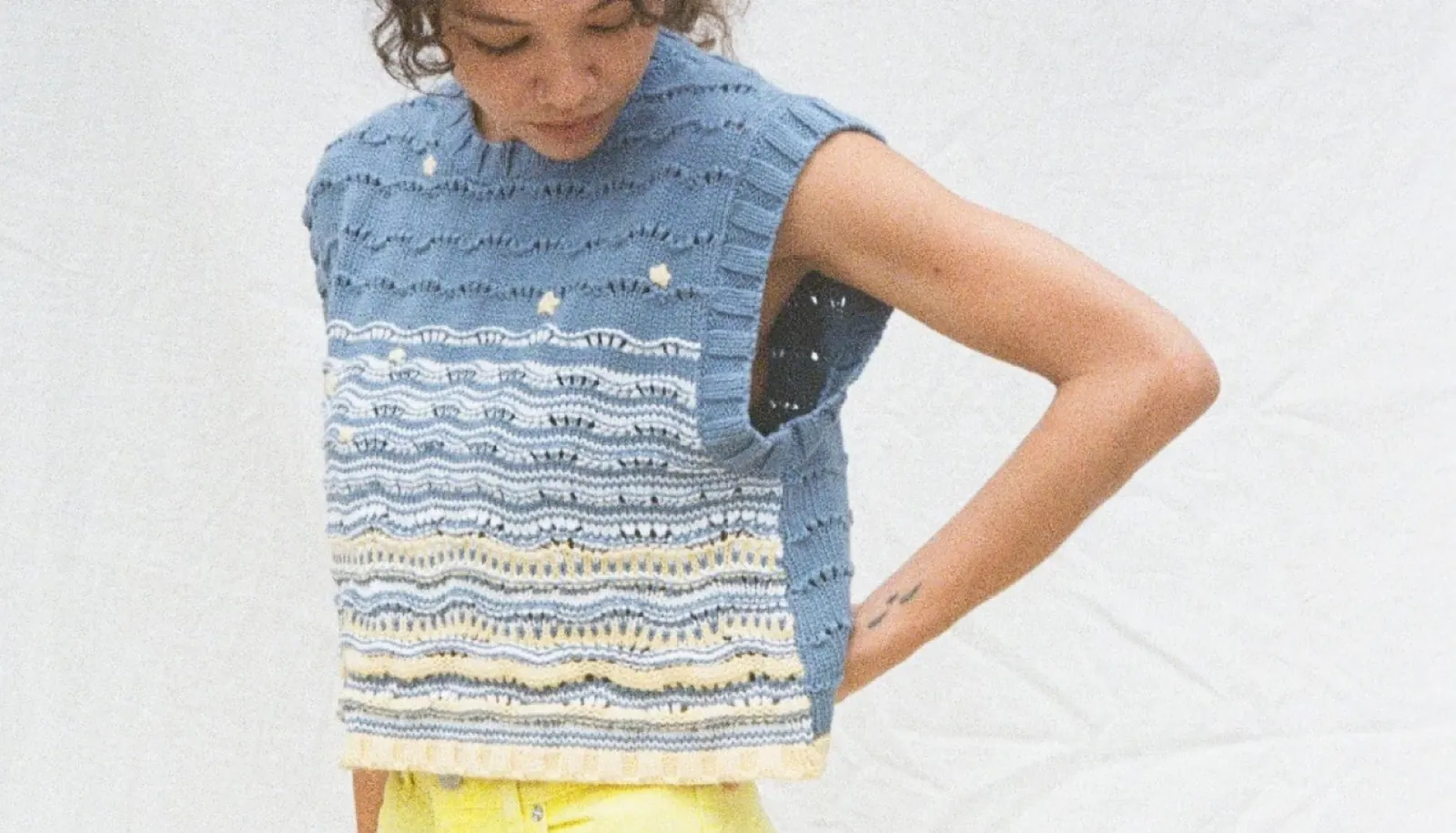
Love From Blue set out to build a fashion brand that produced zero waste. The Hong Kong-based label made its knitwear from deadstock material sourced from local factories and sold it on a pre-order basis, so it could avoid overproduction and leftover stock from each collection.
The brand had a clear view of its identity and how it wanted to be presented. Its business focused primarily on the Hong Kong community, but it also needed to reach a global audience. As a growth company with a small team, it had to get to market quickly, with a store that was easy to manage.
The challenge
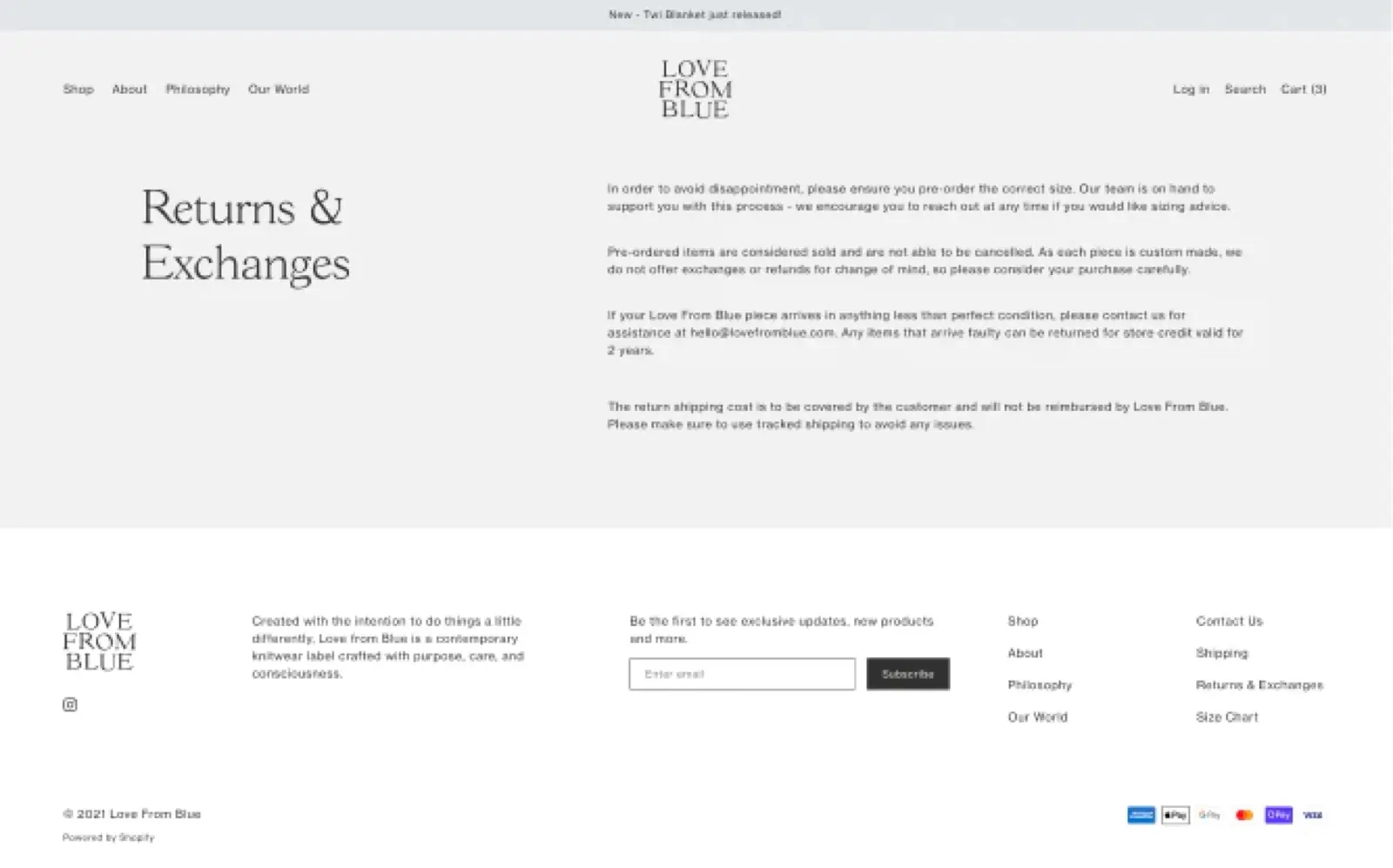
Pre-order was the core requirement and the main challenge. The store had to take pre-orders on a product-variant basis, then let the team manage payment, fulfilment and logistics without a complicated backend process.
Time was also a constraint. A fully custom UX and UI process would have taken longer, and the brand's final content and product photography would not be ready until near the end of the build.
The model also had to be explained. New subscribers and existing customers needed to understand pre-order and the sustainability mission behind it. Email could carry that explanation, but with a small team the channel had been under-used. Growing the list brought a further constraint: opt-in incentives could not rely on discount codes or on content that encouraged over-consumption, because either would contradict the brand's values.
Launching quickly on Shopify
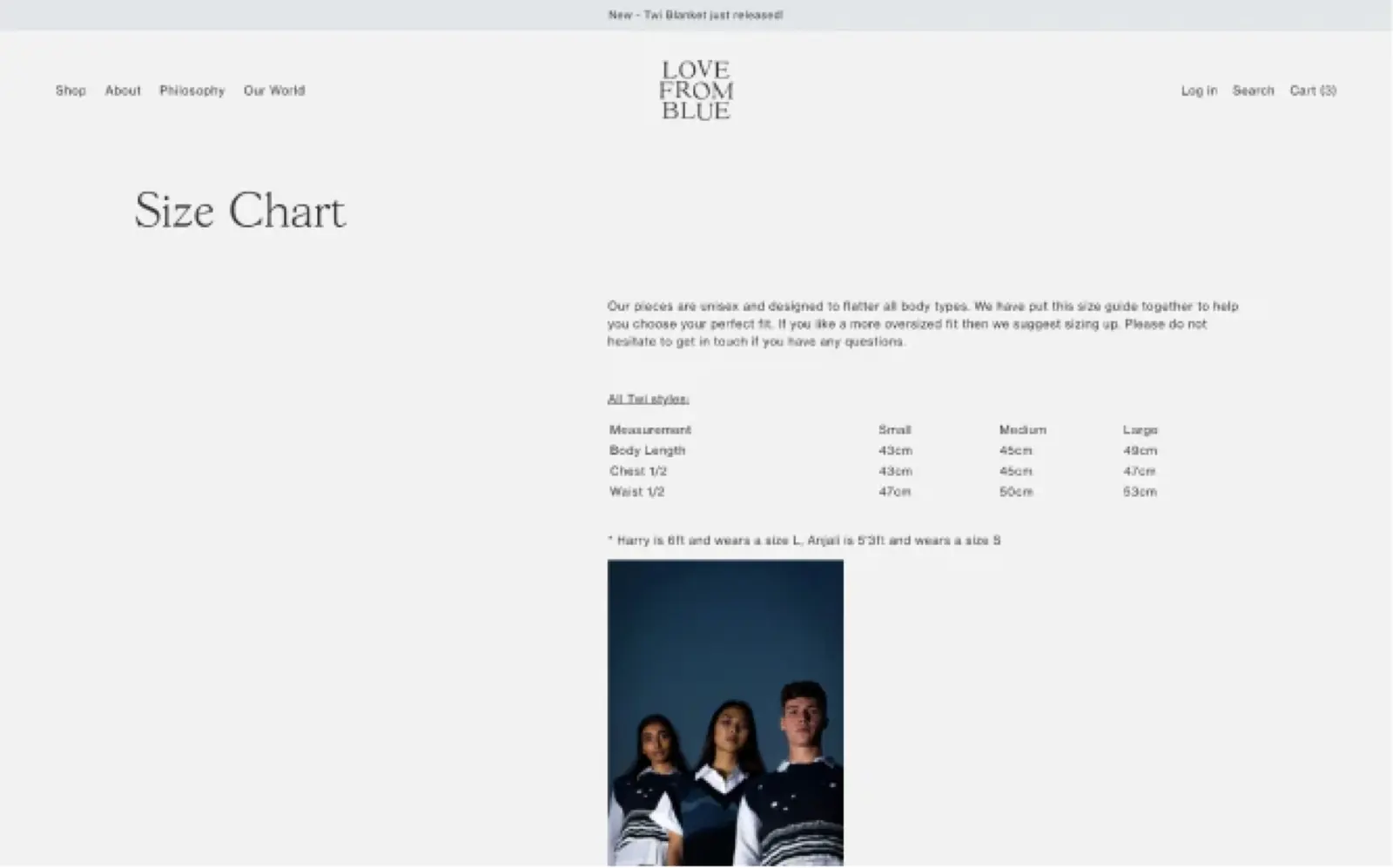
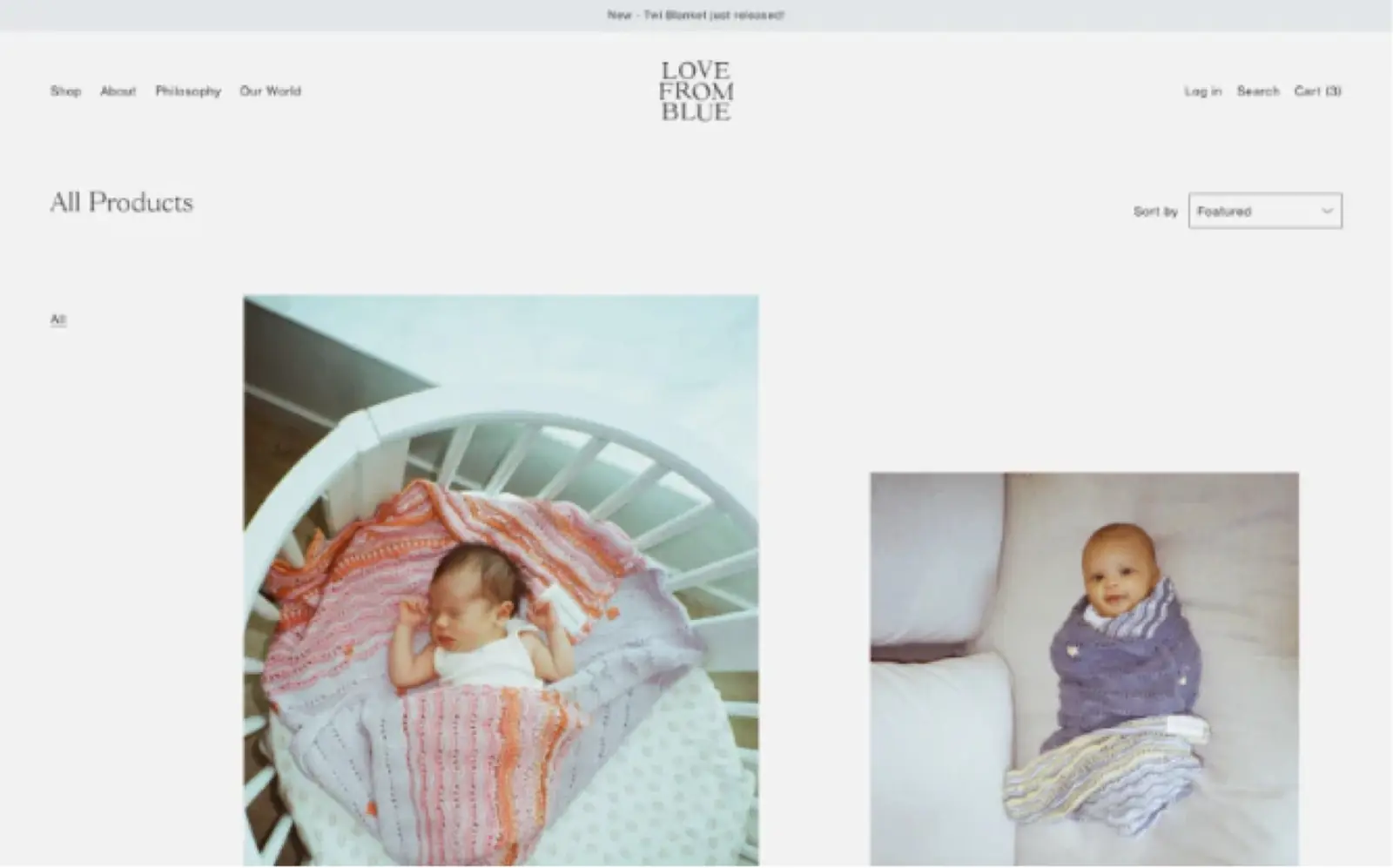
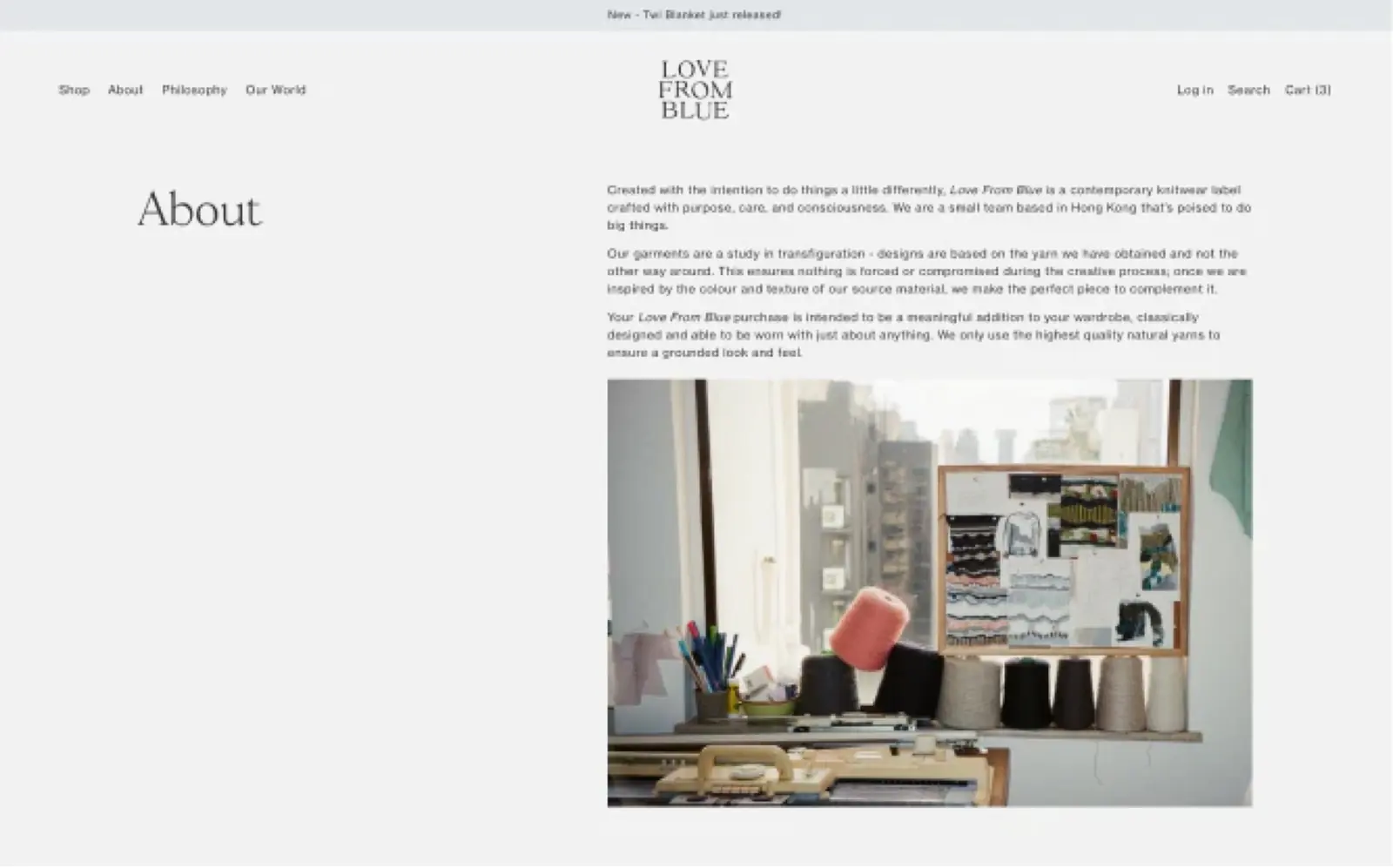
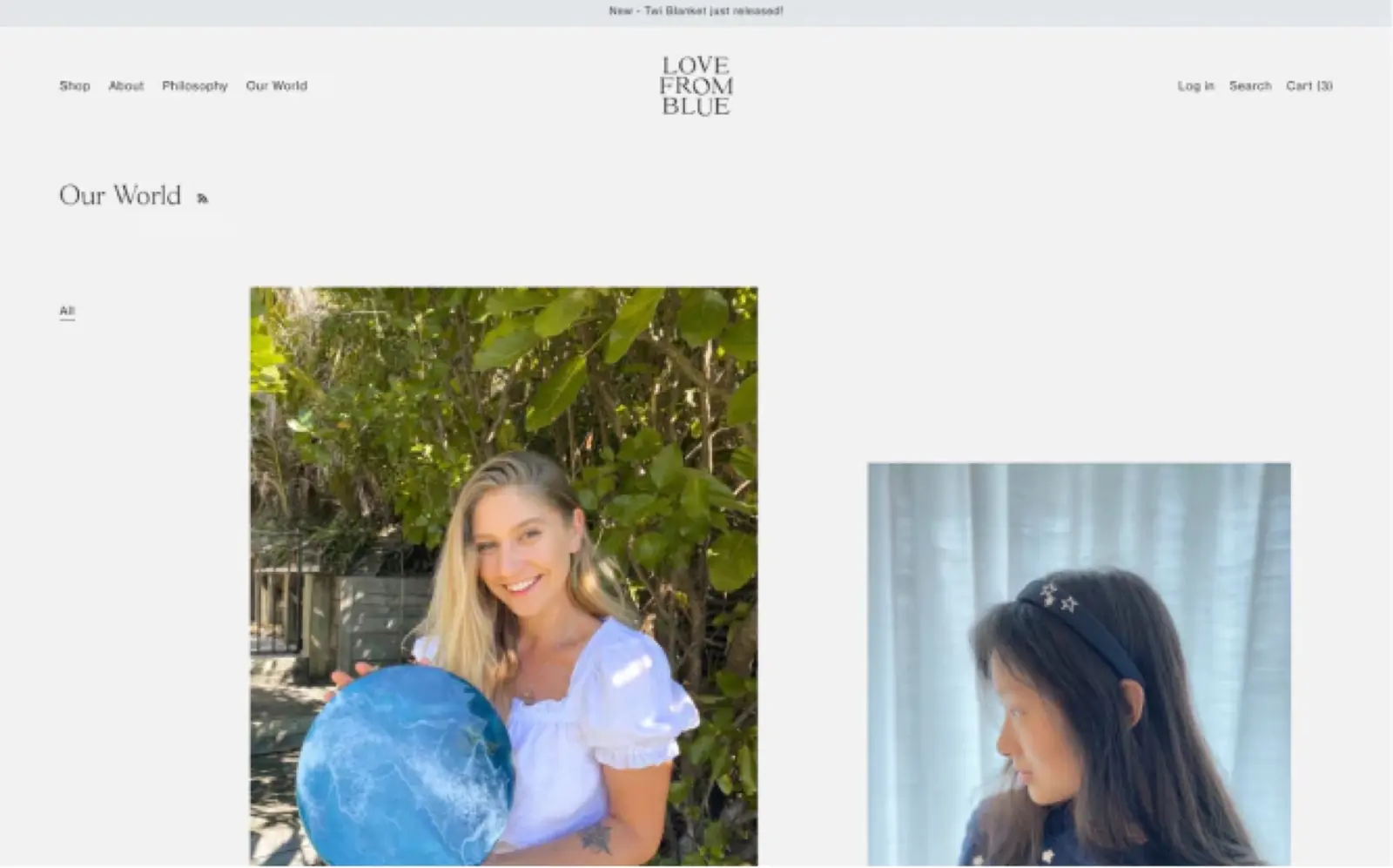
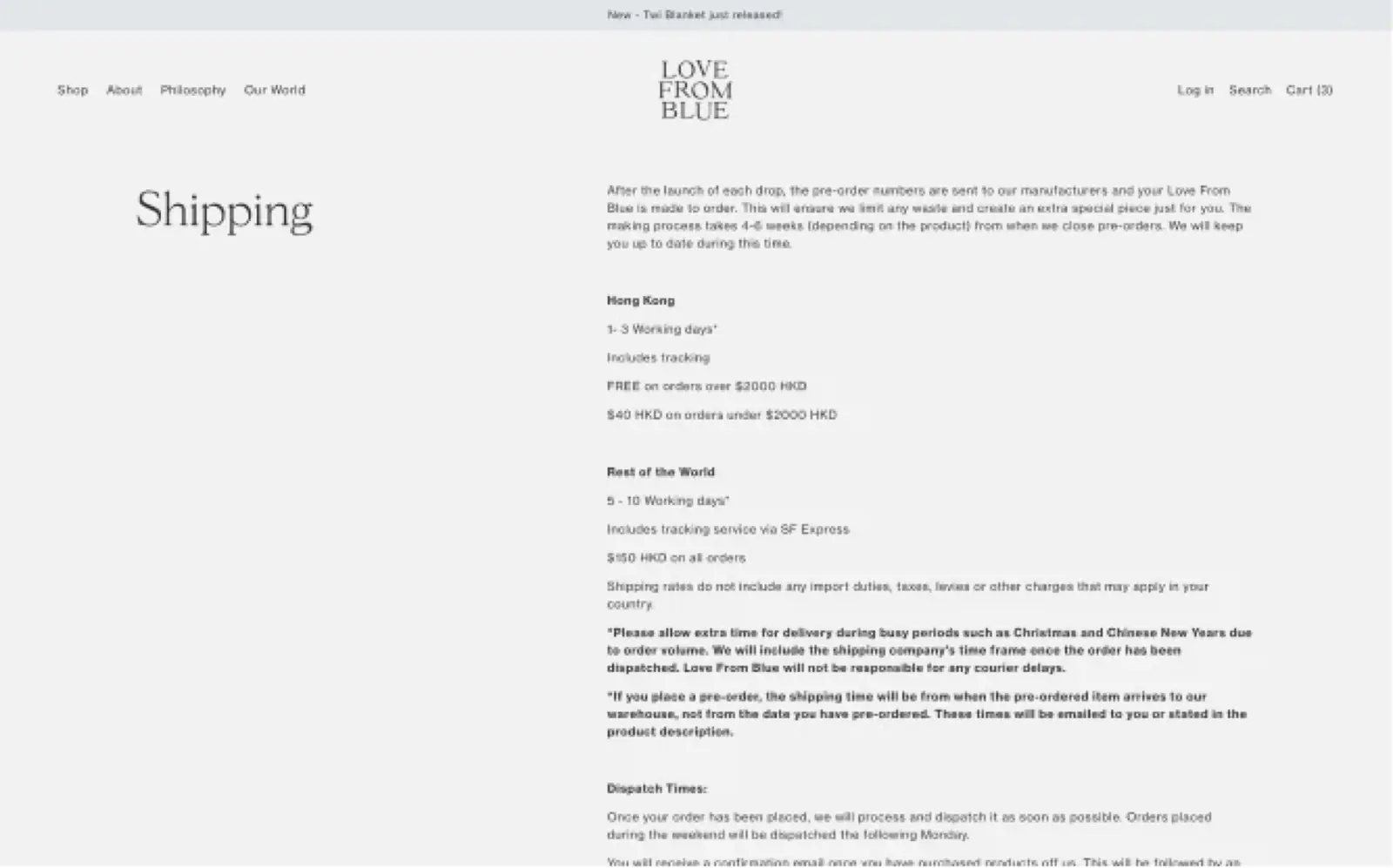
Shopify was chosen because it let the business launch quickly and met many of its requirements out of the box. Rather than design from scratch, Butter selected the Shopify Cascade theme as the closest fit to the brand's UX style, helped define Love From Blue's digital brand and styled the theme into a distinct storefront.
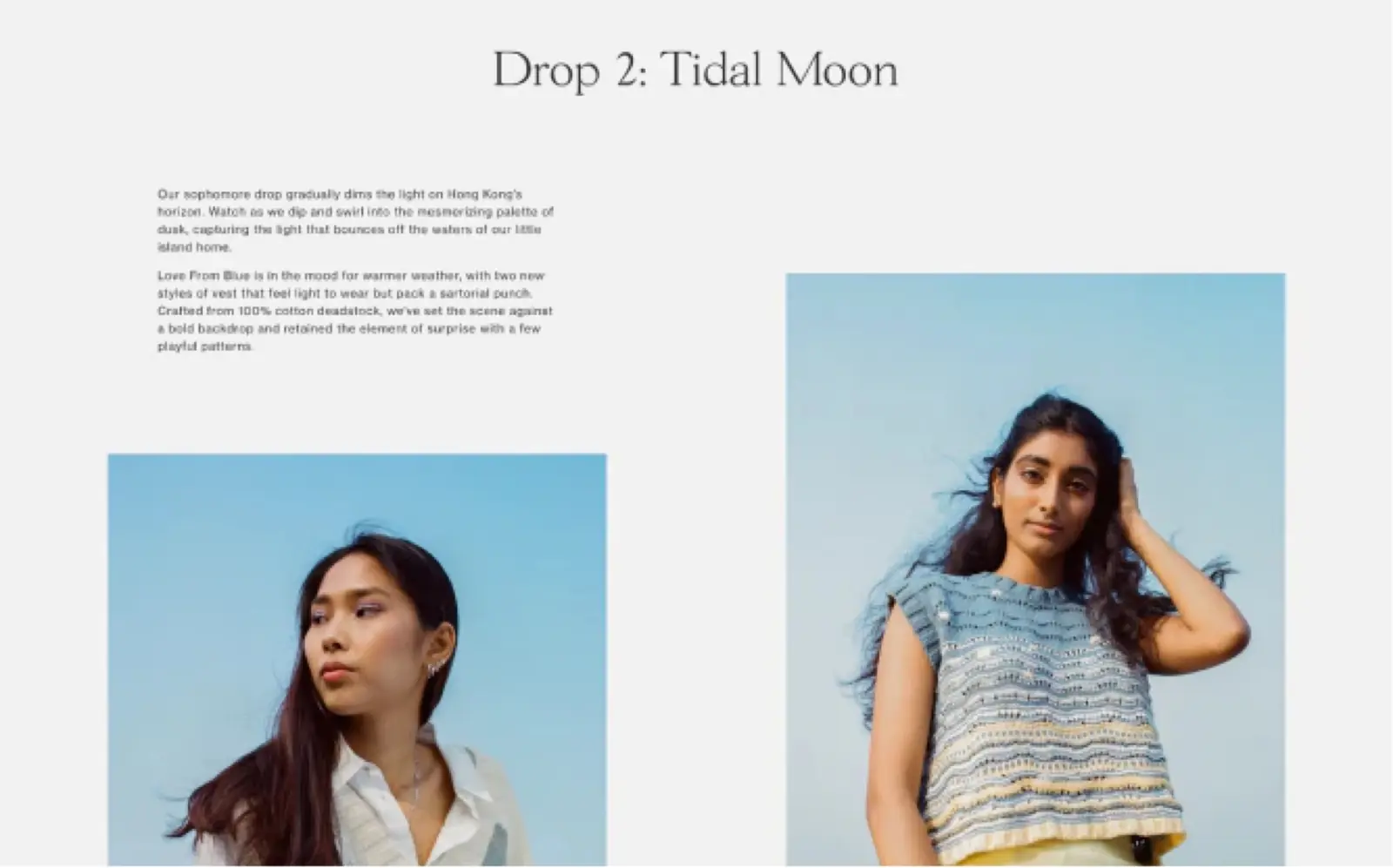
Because photography would arrive late, Butter worked with the Love From Blue team on mood boards and style references. These guided the design while the final images and product shots were gathered, to help ensure the late content did not compromise the design or the brand's identity.
Making pre-order work in the store
The main operational configuration centred on pre-order logic. Butter tested and reviewed several pre-order apps before choosing Globe Pre-order, then matched its logic to the product collection so the configuration was ready for launch.
The build let the team run pre-orders on a variant-by-variant basis, then manage payment, fulfilment and logistics in Shopify. The app also let the team define how pre-orders worked and how they were presented to customers.
Explaining pre-order without discounts
After launch, Butter continued working with Love From Blue on email marketing in Mailchimp, the tool the brand already used. The team reached its audience across the website, Facebook and Instagram, and wanted a time-saving way to run email alongside those channels. At the start, the brand was using Mailchimp's basic pre-made template and a single triggered welcome email, with no automation flows. Most subscribers came from account creation and purchases on the site.
Butter suggested automation flows as the time-saving option, with a more targeted approach to new and potential customers. It implemented a welcome flow for newsletter opt-ins and account creation, and a post-purchase flow covering both in-stock and pre-order products. With discounts ruled out, the flows were designed to do two jobs: build engagement with new subscribers, and explain the pre-order model and sustainability mission to new and existing customers.
Butter also reworked the master campaign template so it reflected the brand identity, followed email design best practice and displayed well on mobile. The aim was more opens and clicks.
To widen where subscribers came from, Butter set up an Instagram landing page to capture sign-ups where the brand's target audience was most active.
What changed
The store launched within four weeks. By June 2021, it had sold more than 50 bespoke, sustainable knitwear products to a global audience.
Email went from a single welcome message on a basic template to automated welcome and post-purchase flows, a branded master template and a sign-up route from Instagram, all built around explaining the brand's model rather than offering discounts. Between 1 December 2021 and 21 January 2022, the subscriber list grew by 22.83% and the welcome flow recorded an average click-through rate of 13.3%.